
Every dog needs regular exercise to stay healthy, happy, and mentally stimulated. But does your dog really need hours of running every day to behave well? The answer is not as simple as many dog owners think.
Exercise requirements depend on your dog’s breed, age, health, energy level, and personality. While high-energy dogs may need more activity, physical exercise alone does not guarantee good behavior. Dogs also need mental stimulation, training, rest, and clear boundaries.
Understanding the difference between physical exercise and mental enrichment can help you create a balanced routine that keeps your dog healthy without exhausting them unnecessarily.
How Much Exercise Does a Dog Need Every Day?
There is no single exercise schedule that works for every dog. Some dogs are comfortable with moderate daily walks and playtime, while others need longer activities and more challenging mental stimulation.
As a general starting point:
- Low-energy adult dogs: May enjoy shorter walks, gentle play, and indoor activities.
- Moderate-energy dogs: Often benefit from regular walks, play sessions, and basic training.
- High-energy dogs: May need longer walks, active play, structured training, and mentally challenging activities throughout the day.
- Puppies: Need short, age-appropriate play and activity sessions with plenty of rest.
- Senior dogs: Still need movement but may benefit from shorter, gentler activities based on their health.
Your dog’s behavior, physical condition, and recovery after exercise are important indicators of whether their routine is appropriate.
Do High-Energy Dogs Really Need Hours of Exercise?
Breeds such as Belgian Malinois, Border Collies, Australian Shepherds, and other working dogs are often described as needing several hours of exercise every day.
Although these breeds generally have higher activity requirements, more exercise isn’t always the solution to every behavioral problem.
A dog that receives only repetitive, high-intensity physical activity may gradually develop better endurance and stamina. That means they may become fitter without necessarily learning how to relax, focus, or control their impulses.
Instead of relying entirely on running or endless play, high-energy dogs benefit from a combination of:
- Physical exercise.
- Obedience and training.
- Mental challenges.
- Structured walks.
- Opportunities to explore.
- Rest and relaxation.
The goal is to create a dog that can enjoy activity but also remain calm when activity is not available.
Exercise Alone Does Not Teach Good Behavior
One of the biggest misconceptions among dog owners is that a tired dog will automatically be a well-behaved dog.
Exercise can help reduce boredom and provide an outlet for energy, but it does not automatically teach a dog what behaviors are acceptable.
For example, a dog may still:
- Jump on visitors.
- Pull on the leash.
- Steal food from counters.
- Bark excessively.
- Become overly excited indoors.
- Struggle to relax when guests arrive.
These behaviors may require training, management, and consistent boundaries rather than simply adding more running time.
What Is Impulse Control in Dogs?
Impulse control is a dog’s ability to resist an immediate urge and respond appropriately to a situation.
For example, a dog may want to chase another animal, grab food from the counter, or run toward a visitor. With appropriate training, the dog learns to pause and follow a cue or rule instead of reacting immediately.
Impulse control can be developed through everyday training, including:
- Waiting before eating.
- Staying calm before going through a door.
- Walking calmly on a leash.
- Responding to recall commands.
- Settling on a bed or mat.
- Leaving food or objects when instructed.
- Remaining calm around distractions.
Teaching these skills helps dogs make better choices, even when they have excess energy.
Why a Structured Walk Can Be More Beneficial
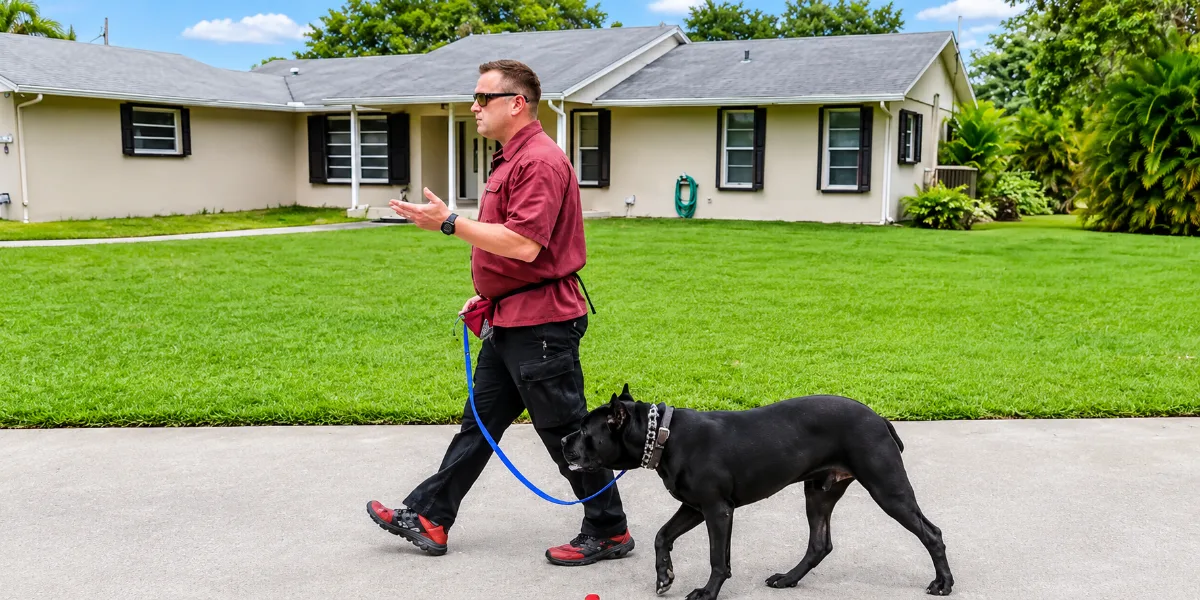
A walk doesn’t have to be a nonstop march or an uncontrolled run. A structured walk can combine physical movement, environmental exploration, obedience, and mental stimulation.
During a walk, you can allow your dog to sniff and explore, practice walking calmly beside you, stop for simple commands, and work on responding to distractions.
A balanced walk may include:
- Walking beside you for short periods.
- Allowing controlled sniffing and exploration.
- Practicing sit, down, stay, or recall.
- Changing direction when appropriate.
- Rewarding calm behavior around distractions.
- Giving your dog opportunities to move freely in a safe area.
This approach helps your dog exercise while also learning how to focus and regulate their behavior.
However, structured walks should not replace opportunities for dogs to explore naturally, sniff, play, and enjoy their environment.
Physical Exercise vs. Mental Stimulation
Both physical exercise and mental stimulation are important for your dog’s overall well-being.
Physical Exercise
Physical activities help maintain muscle strength, cardiovascular health, mobility, and healthy body weight.
Examples include:
- Walking.
- Running, when appropriate.
- Fetch.
- Swimming.
- Hiking.
- Tug-of-war.
- Playing with other compatible dogs.
Mental Stimulation
Mental activities challenge your dog’s brain and encourage problem-solving, focus, and natural behaviors.
Examples include:
- Obedience training.
- Scent games.
- Food puzzles.
- Hide-and-seek.
- Learning new commands.
- Searching for hidden treats.
- Exploring new walking routes.
Mental activities can be especially useful on days when you cannot provide a long walk. They are not a complete replacement for regular physical activity, but they can be a valuable part of your dog’s daily routine.
How to Exercise Your Dog Without Overdoing It
You don’t necessarily need to spend several hours exercising your dog every day. The key is providing appropriate activities consistently.
1. Take Regular Walks
Walking provides movement, mental stimulation, and opportunities to explore the environment. Adjust the length and pace based on your dog’s age, breed, health, and fitness.
2. Include Short Training Sessions
A few short training sessions throughout the day can help develop focus and impulse control.
Practice basic commands, leash manners, recall, and calm behavior in different environments.
3. Play Interactive Games
Fetch, tug, hide-and-seek, and scent games provide a combination of physical and mental activity.
Choose games appropriate for your dog’s temperament and physical abilities.
4. Allow Sniffing and Exploration
Sniffing is a natural behavior that gives dogs information about their environment. Allowing time to explore during walks can make the experience mentally enriching.
5. Teach Your Dog to Relax
Rest and calm behavior are also important skills.
Encourage your dog to settle on a bed, relax indoors, or remain calm while you work. Dogs should learn that they don’t need constant activity or entertainment.
What Happens If Your Dog Misses a Walk?
Missing an occasional walk because of bad weather, illness, a busy schedule, or other circumstances is generally not a disaster for a healthy dog.
You can temporarily replace some outdoor activity with:
- Indoor training.
- Food puzzles.
- Hide-and-seek games.
- Short play sessions.
- Scent-based activities.
- Practicing calm behavior.
However, regularly skipping exercise without providing alternative activities may contribute to boredom, frustration, or unwanted behaviors.
Dogs still need consistent opportunities to move, explore, and engage with their environment.
Signs Your Dog May Need More Exercise
Your dog may need more physical activity or mental enrichment if you notice:
- Persistent restlessness.
- Destructive chewing.
- Excessive attention-seeking.
- Difficulty settling down.
- Repeated attempts to initiate play.
- Boredom-related behaviors.
These signs don’t always mean your dog needs more exercise. Pain, anxiety, inadequate sleep, and other medical or behavioral issues may also contribute. If the behavior is sudden or persistent, consult your veterinarian.
Signs Your Dog Is Getting Too Much Exercise
Exercise should improve your dog’s health, not leave them exhausted or uncomfortable.
Watch for signs such as:
- Excessive panting.
- Slowing down or repeatedly stopping.
- Reluctance to continue walking.
- Limping or stiffness.
- Difficulty recovering after activity.
- Unusual weakness or discomfort.
Stop exercising if your dog appears distressed, overheated, or unusually fatigued. Seek veterinary advice if symptoms persist or are severe.
Creating a Balanced Daily Exercise Routine
A balanced daily routine combines physical activity, mental stimulation, training, and rest.
For example, a healthy adult dog might have:
Morning: A walk with opportunities to sniff and explore, followed by breakfast.
During the day: A short training session, food puzzle, or interactive play.
Evening: Another walk, play session, or activity suited to the dog’s energy level.
Throughout the day: Rest, calm indoor behavior, and opportunities to relax.
This is only an example. Puppies, senior dogs, working breeds, and dogs with medical conditions may require different schedules.
Frequently Asked Questions
How many hours of exercise does a dog need per day?
Exercise needs vary by breed, age, health, and energy level. Some dogs need moderate daily activity, while high-energy breeds may require significantly more exercise, training, and mental stimulation.
Is a 30-minute walk enough for a dog?
A 30-minute walk may be suitable for some dogs, but it may not meet the needs of every breed or individual. Consider your dog’s activity level, behavior, health, and whether they also receive playtime and mental enrichment.
Does exercising a dog more make it better behaved?
Not necessarily. Exercise can help reduce boredom and excess energy, but good behavior also requires training, boundaries, impulse control, and learning how to relax.
What can I do to tire my dog mentally?
Try obedience training, scent games, food puzzles, hide-and-seek, learning new commands, and allowing your dog to explore new environments. Mental activities complement physical exercise.
Is it okay if my dog misses a walk occasionally?
Yes, missing an occasional walk is generally okay for a healthy dog. Provide indoor play, training, enrichment, and opportunities to go outside for bathroom breaks as needed. Try to maintain a consistent exercise routine over time.