Walking your dog should be an enjoyable experience, not a constant struggle against pulling. Whether your dog is excited by squirrels, other dogs, new smells, or simply eager to explore, leash pulling can make everyday walks frustrating and difficult to manage.
The key to improving leash manners is teaching your dog that walking calmly beside you is rewarding. With consistent training, patience, and the right techniques, you can help your dog develop better leash habits and enjoy more relaxed walks.
Why Do Dogs Pull on the Leash?
Dogs naturally move faster than humans and are easily distracted by their surroundings. Pulling often happens because dogs learn that moving forward while pulling allows them to reach something interesting.
Common reasons include:
- Excitement about outdoor activities
- Curiosity about smells, people, and other animals
- Lack of leash training
- Excessive energy
- Inconsistent walking habits
- Pulling successfully to reach their destination
If pulling consistently gets your dog where they want to go, the behavior becomes reinforced. Training helps change this pattern by making calm walking more rewarding.
1. Start Training in a Low-Distraction Environment
Before practicing leash walking around busy streets, parks, or other dogs, begin somewhere quiet.
Choose an environment where your dog can focus more easily, such as your backyard, driveway, or a quiet sidewalk. This gives your dog an opportunity to learn without being overwhelmed by distractions.
Keep initial training sessions short and positive. Gradually introduce more challenging environments as your dog becomes more comfortable walking on a loose leash.
2. Reward Your Dog for Staying Near You
One of the most effective ways to teach loose-leash walking is to reward your dog whenever they walk close to you with a relaxed leash.
Use small, high-value treats to encourage your dog to stay near your side. Reward moments when your dog checks in with you, follows your direction, or walks without pulling.
You can also use verbal praise to reinforce good behavior.
The goal is to help your dog understand that staying close to you brings positive experiences.
3. Change Direction When Your Dog Pulls
When your dog begins pulling ahead, calmly change direction instead of allowing them to continue moving forward.
This encourages your dog to pay attention to your movement and follow your lead.
As soon as your dog catches up and walks beside you, reward them. Practice direction changes in a quiet environment before using the technique in more distracting situations.
Avoid jerking the leash or making sudden, forceful movements. Keep the experience calm and predictable so your dog can learn what you expect.
4. Stop Walking When the Leash Becomes Tight
Another useful technique is to stop moving whenever your dog pulls.
Stand still and wait for your dog to reduce the tension on the leash. Once the leash becomes loose, continue walking.
This teaches your dog that pulling does not move the walk forward, while walking calmly allows them to continue exploring.
Consistency is important. If you sometimes allow pulling and sometimes stop, your dog may become confused about which behavior works.
5. Use Gentle Leash Guidance
Leash guidance can help redirect your dog’s attention when they begin moving too far ahead.
Instead of continuously pulling your dog back toward you, use calm guidance and encourage them to return to a comfortable walking position.
Reward your dog when they respond to your guidance and reconnect with you.
Avoid harsh leash corrections, especially with puppies, small dogs, dogs with neck problems, or dogs that are already anxious. A properly fitted harness can be a helpful option for dogs that pull, particularly those prone to neck or respiratory injuries.
6. Teach Your Dog to Pay Attention to You
Loose-leash walking becomes much easier when your dog regularly checks in with you.
Practice rewarding your dog for:
- Looking at you during walks
- Responding to their name
- Following your direction
- Returning to your side
- Staying calm when distractions appear
You can make attention training more engaging by occasionally changing direction, rewarding spontaneous eye contact, and using short training exercises during your walk.
The more your dog learns to pay attention to you, the easier it becomes to manage distractions.
7. Use the Right Walking Equipment
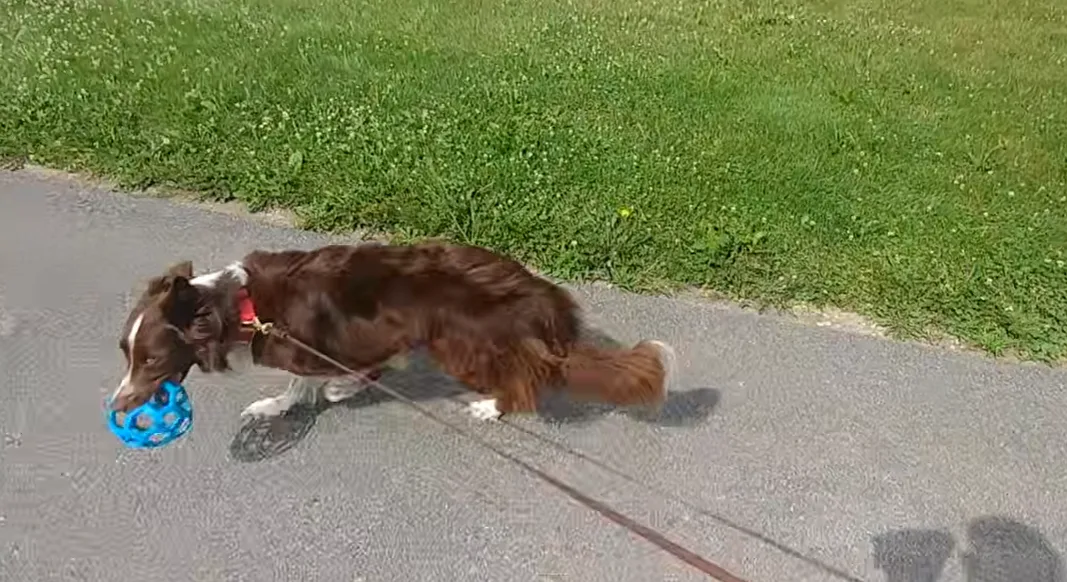
The right equipment can improve comfort, safety, and control during leash training.
Consider using:
- A standard 4–6-foot leash for everyday walks
- A well-fitted harness for dogs that pull or have sensitive necks
- A flat collar for dogs comfortable walking without excessive tension
- Small training treats for rewarding good behavior
Avoid relying on equipment alone to solve pulling. A leash, collar, or harness cannot replace consistent training and reinforcement.
8. Manage Distractions During Walks
Dogs often pull when they become excited about something ahead of them.
If your dog is focused on another dog, a squirrel, or an interesting smell, create more distance from the distraction so they can regain focus.
Reward calm behavior and gradually practice closer to distractions as your dog improves.
For highly excitable dogs, it may be helpful to walk in quieter areas during the early stages of training.
9. Practice Consistently
Leash training is not something that happens in one walk. Dogs need repetition to understand and maintain new behaviors.
Practice every day, even if you only spend a few minutes working on loose-leash walking.
Be patient with setbacks. Your dog may walk beautifully in a quiet area but begin pulling again in a busy park. This is normal because different environments require different levels of training.
Progress gradually and celebrate small improvements.
10. Give Your Dog Opportunities to Explore
A walk should not be entirely about maintaining a strict walking position.
Allow your dog to sniff, explore, and investigate their environment during appropriate moments. Sniffing provides mental stimulation and can help make walks more satisfying.
You can alternate between structured walking and relaxed exploration. For example, reward calm walking and then give your dog permission to sniff a nearby grassy area.
This balance helps make leash training enjoyable instead of frustrating.
Common Mistakes to Avoid When Leash Training
Avoid these common mistakes when teaching your dog to walk calmly:
- Allowing pulling sometimes but correcting it other times
- Using excessive force on the leash
- Expecting immediate results
- Training in highly distracting environments too early
- Walking for too long without breaks
- Punishing your dog for reacting to distractions
- Forgetting to reward calm walking
A positive, consistent approach helps your dog understand what behavior you want rather than simply trying to avoid corrections.
Frequently Asked Questions
How long does it take to stop a dog from pulling on the leash?
It depends on your dog’s age, temperament, training history, and consistency. Some dogs improve within a few weeks, while others need several months of regular practice.
Should I stop walking when my dog pulls?
Yes. Stopping when the leash becomes tight can help teach your dog that pulling does not move them forward. Continue walking once the leash is loose.
Is a harness better than a collar for dogs that pull?
A well-fitted harness can provide better comfort and reduce pressure on the neck for many dogs. However, a harness does not automatically stop pulling, so consistent training is still important.
Why does my dog pull even after training?
Dogs may pull when they encounter exciting distractions, unfamiliar environments, or situations where their training is not yet strong enough. Continue practicing gradually in different environments and reinforce calm walking.
Can older dogs learn to walk without pulling?
Yes. Dogs of any age can learn better leash manners. Older dogs may need more time to change established habits, but patience and consistent positive reinforcement can help them improve.